Hospitals, clinics, laboratories, veterinary centers, and animal farms produce waste that cannot be thrown away like regular trash. Infectious medical waste and animal carcasses both carry disease risk and need safe, hygienic disposal. Incineration is one of the most reliable ways to do this. This guide explains what a medical waste incinerator and an animal body incinerator machine are, how they work, and where each one is used.
What Is a Medical Waste Incinerator?
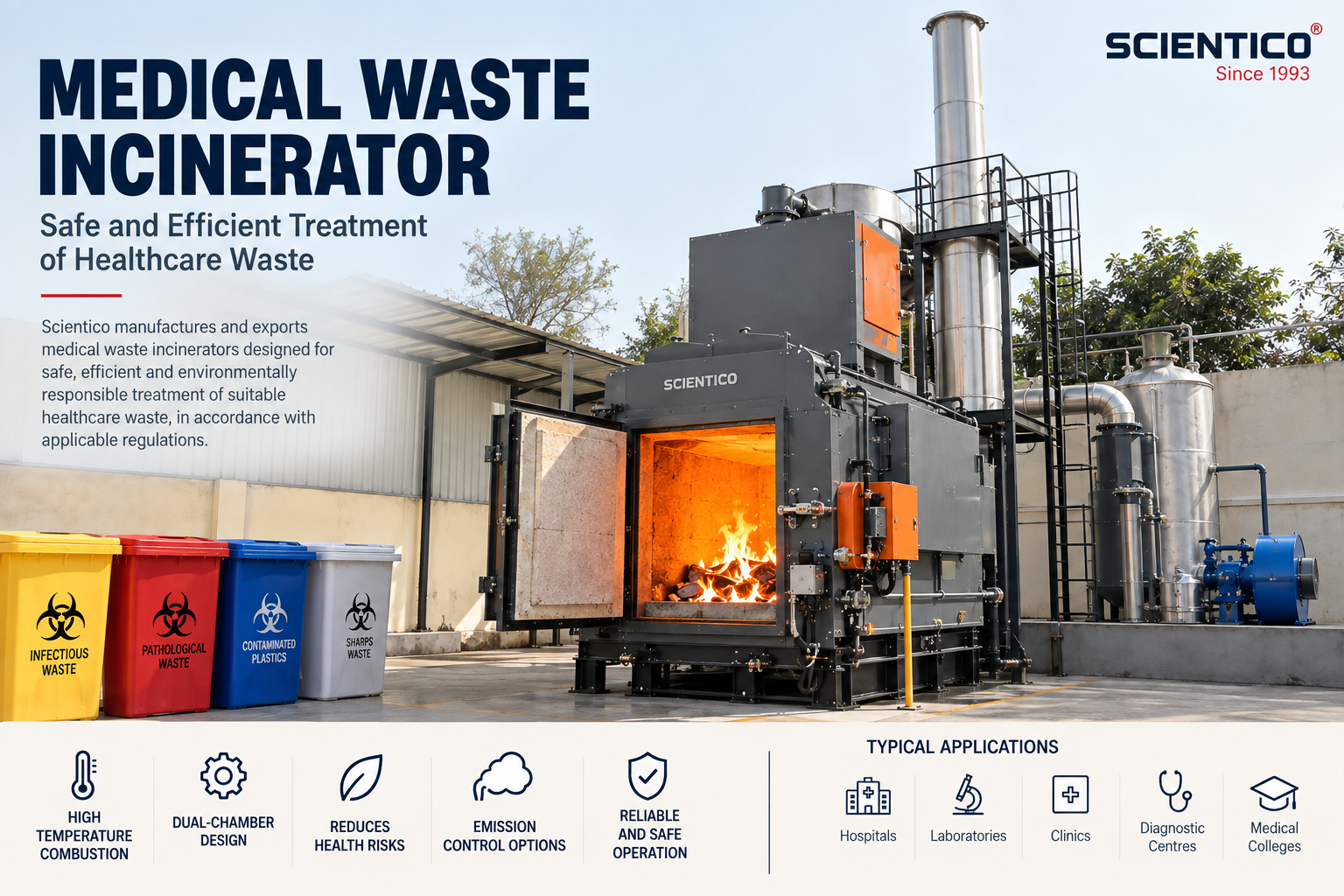
A medical waste incinerator is a high-temperature furnace designed to burn biomedical waste such as syringes, bandages, gloves, pathological waste, blood-soaked materials, and expired medicines. The heat destroys harmful pathogens and reduces waste volume by up to 90%, leaving only sterile ash.
What Is an Animal Body Incinerator Machine?
An animal body incinerator machine is built to cremate dead animals, including pets, livestock, poultry, and laboratory animals. It is commonly used by veterinary hospitals, animal shelters, dairy and poultry farms, zoos, and research institutes. It prevents the spread of disease that can happen when carcasses are buried or left to decompose, and it avoids contamination of soil and groundwater.
How Do These Incinerators Work?
Both machines follow a similar dual-chamber process:
- Loading: Waste or the animal body is placed into the primary chamber.
- Primary combustion: The material is burned at high temperature and reduced to ash.
- Secondary combustion: Smoke and gases move to a second chamber, where higher heat breaks down harmful compounds and reduces odor.
- Emission control: A pollution control system treats the exhaust before it leaves the chimney.
- Ash removal: The remaining sterile ash is collected and disposed of safely.
Key Differences
| Feature | Medical Waste Incinerator | Animal Body Incinerator |
|---|---|---|
| Waste type | Infectious and biomedical waste | Animal carcasses and remains |
| Used by | Hospitals, labs, clinics | Vet centers, farms, shelters |
| Main goal | Destroy pathogens | Safe, hygienic carcass disposal |
| Chamber design | Often higher temperature settings | Built for larger, heavier loads |
Benefits of Using Incinerators
- Disease prevention: Pathogens and bacteria are destroyed completely.
- Volume reduction: Less waste goes to landfill.
- On-site convenience: No waiting for outside collection or long storage.
- Cost savings: Lower transport and third-party disposal costs.
- Environmental protection: Controlled emissions and no soil contamination.
How to Choose the Right Incinerator
Before buying, check the burn capacity (kg/hour), fuel type (diesel, gas, or electric), temperature control, pollution control system, and build quality. Choose an experienced manufacturer that also provides installation and after-sales support.
Conclusion
Whether you handle biomedical waste or animal remains, an incinerator is a safe and responsible way to dispose of it. A good medical waste incinerator or animal body incinerator machine protects public health, keeps the environment clean, and helps you follow disposal regulations. To find the right model for your facility, visit Scientico Incinerators.